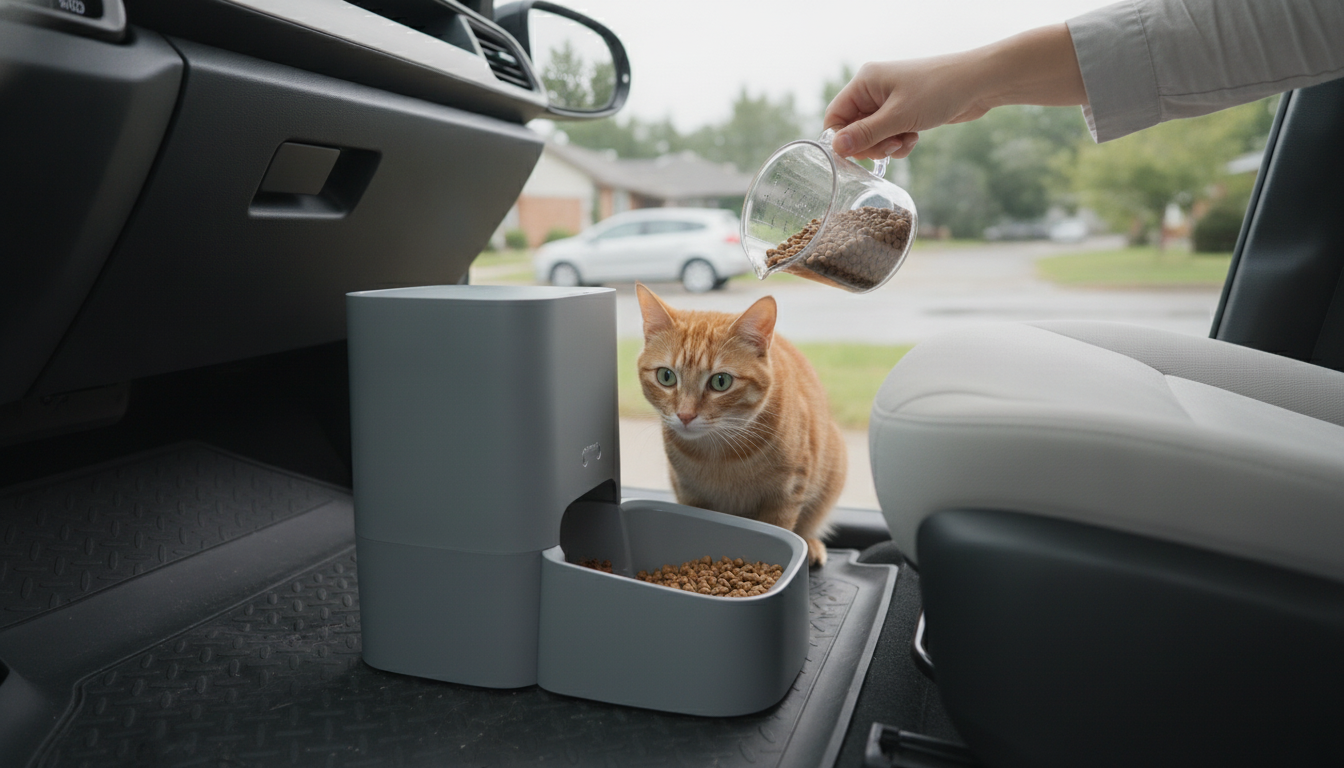
Most cats start settling into a new feeding routine within about 7–14 days, but the full adjustment can take up to 3–4 weeks depending on age, temperament, and how big the change is. Kittens and food-motivated cats may adapt faster, while anxious cats or picky eaters often need more time and a gentler transition.
Kittens typically learn routines quickly because their schedules are still forming. Adult cats who’ve eaten the same way for years can resist changes like new meal times, portion sizes, or switching from free-feeding to set meals.
Small shifts—like moving dinner 30 minutes earlier—usually click within a week. Bigger changes—like transitioning foods, changing feeding locations, or moving from multiple snacks to two meals—can take a few weeks.
Recent moves, new pets, loud environments, or competition at the bowl can slow progress. Calm, predictable surroundings help cats trust the new routine faster.
Pick meal times you can realistically stick to daily. Cats learn patterns by repetition, so frequent exceptions can prolong the adjustment.
If the routine includes a new food, use a slow mix-in approach to reduce stomach upset and refusal. A practical feeding schedule, portion guidance, and food-transition tips are outlined in this feeding guide.
Feed in the same spot, use the same bowl, and keep pre-meal cues consistent (like calling your cat or setting the dish down the same way). If your cat walks away, pick up the food after 15–20 minutes so mealtimes stay predictable.
Improvement looks like showing up near mealtime, eating calmly, and maintaining normal stool and energy. If your cat stops eating for 24 hours, vomits repeatedly, or seems lethargic, contact a veterinarian promptly.
Timed meals can feel unfamiliar at first, especially for cats used to grazing. It often improves within 1–2 weeks as the new rhythm sets in and portions are dialed in for your cat’s needs.













Leave a comment