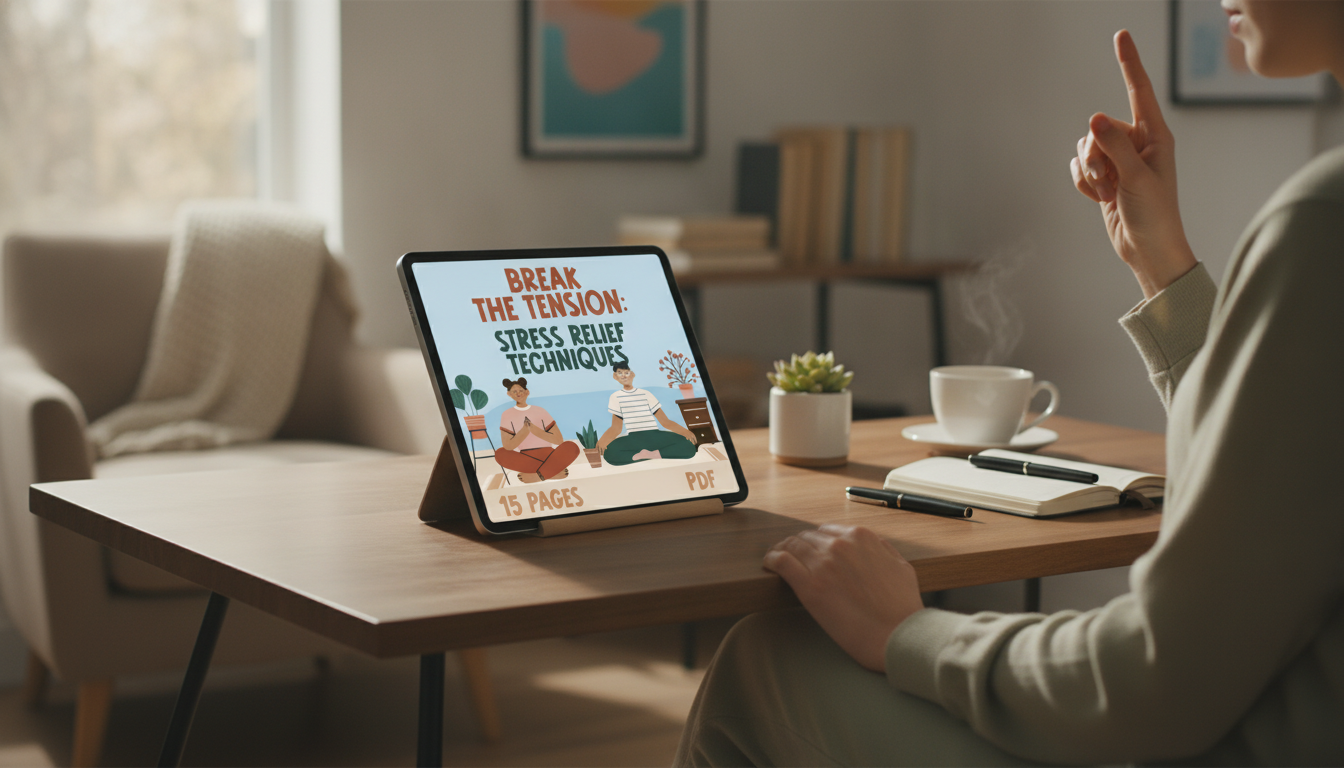
Stress often shows up as tight shoulders, shallow breathing, racing thoughts, or a packed schedule that leaves no recovery time. Small, repeatable skills can interrupt that loop quickly—especially when breathing, attention, and planning work together. The techniques below are designed to be simple, fast, and easy to practice at home, at work, or on the go.
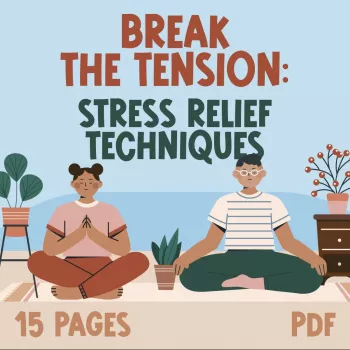
For added structure, a guided resource like Break the Tension: Stress Relief Techniques – Breathing Exercises, Quick Meditations, Grounding Techniques, and Time Management Tips to Reduce Stress can make it easier to stick with a plan when you’re already overwhelmed.
Stress is easier to shift when it’s caught early. A fast “pattern interrupt” starts with noticing what’s happening in the body and mind—before it turns into hours of tension.
Quick check-in (20 seconds): rate your tension (0–10), take one slow exhale, then choose a single technique below. The goal is not to fix everything at once—just to reduce the intensity enough to make a better next decision.
Breathing is a direct lever for dialing down the stress response. Techniques like breath focus and body scanning are widely recommended in clinical and wellness settings because they’re practical and learnable (see Harvard Health Publishing).
| Situation | Technique | How long | What to focus on |
|---|---|---|---|
| Heart racing before a meeting | Physiological sigh | 1 minute | Long exhale; relaxed shoulders |
| Feeling scattered mid-task | Box breathing | 2–4 minutes | Even counts; steady rhythm |
| Tension headache building | Extended exhale (4 in / 6–8 out) | 3 minutes | Soft exhale; unclench jaw |
| Can’t fall asleep | Extended exhale | 5 minutes | Slow nasal breathing; heavy limbs |
Short mindfulness practices can reduce reactivity and help attention come back online. Meditation and mindfulness are also well-studied for stress management and overall coping (see the National Center for Complementary and Integrative Health and the American Psychological Association).
Grounding is about convincing your nervous system that you’re safe enough right now to come back to the present. These are especially helpful when your mind is future-casting and scanning for problems.
Many stress spirals aren’t just emotional—they’re structural. When tasks are vague, priorities collide, and your brain never sees a finish line, tension keeps rebuilding.
If movement helps discharge tension, comfortable gear can remove friction. For a walk, gentle jog, or quick stretch session, High Waist Compression Running Shorts for Women – Quick-Dry & Breathable can support a simple “move for 10 minutes” habit that pairs well with breathwork and grounding.
For an all-in-one toolkit, Break the Tension: Stress Relief Techniques – Breathing Exercises, Quick Meditations, Grounding Techniques, and Time Management Tips to Reduce Stress organizes these methods into quick, repeatable practices you can return to when you need them most.
Try a 30–60 second physiological sigh (two-part inhale, long exhale) or 4-in/6–8-out breathing. Follow it with a quick grounding step like naming three things you can see and three things you can feel.
Daily micro-sessions (1–5 minutes) tend to add up quickly, especially when attached to routines like morning, midday, and evening. Use the same tools “as needed” during spikes to reinforce the habit.
It reduces stress when it clarifies priorities and makes tasks smaller and finishable, rather than adding complexity. Defining “done,” using single-task windows, and keeping a “not now” list can reduce mental overload.












Leave a comment