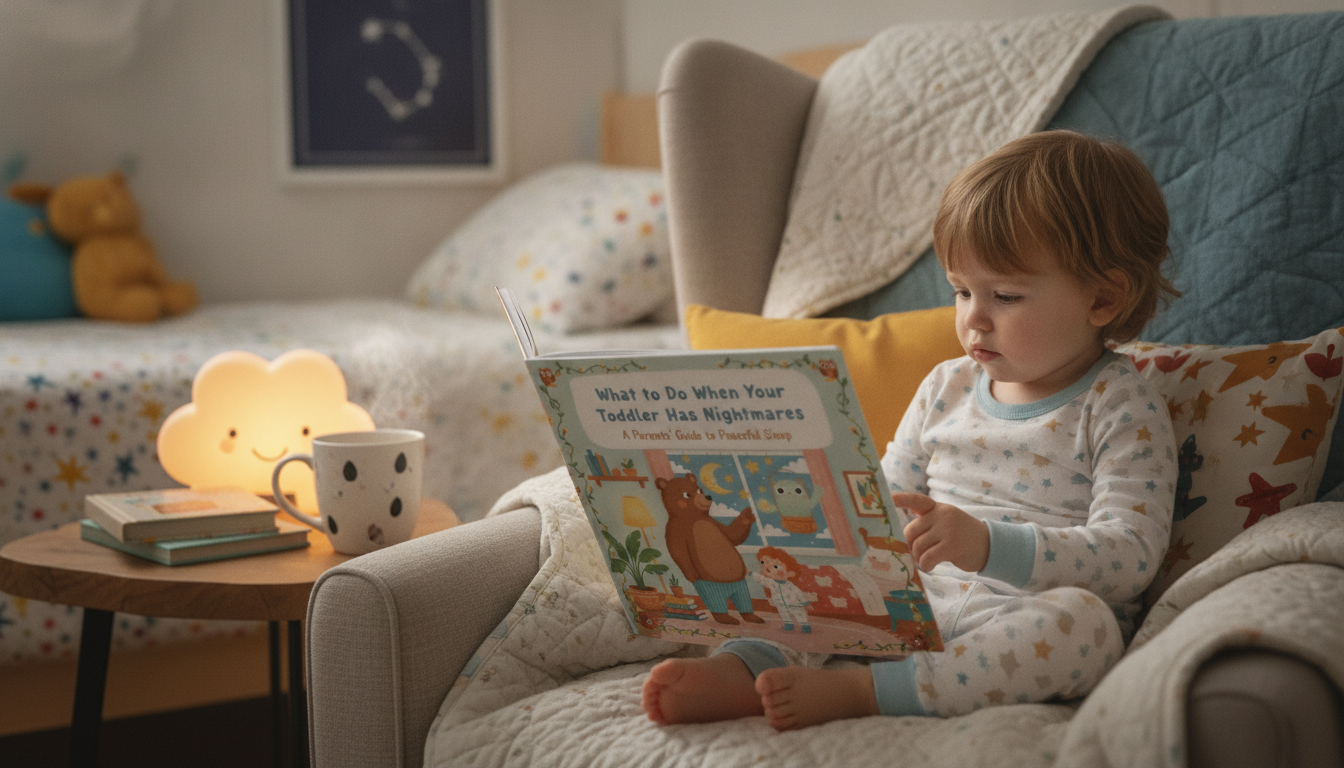
Nightmares can feel intense for toddlers and exhausting for parents—especially when they repeat night after night. A calm, predictable response helps a child feel safe again while reducing the chances of a long wake-up. Below is a practical, step-by-step approach for comforting your toddler in the moment, strengthening bedtime routines, and spotting when extra support may be needed.
Knowing what you’re dealing with can save a lot of frustration at 2 a.m. Nightmares usually show up in the second half of the night, and your child wakes fully, often able to describe what scared them. Night terrors tend to happen in the first third of the night; a child may scream, thrash, and look awake, but they’re hard to console and typically won’t remember it the next morning.
Nightmares respond well to reassurance and brief comfort. Night terrors usually improve when you keep your child safe and avoid fully waking them. If episodes are frequent, long, or involve unsafe behavior (like climbing out of bed or running), discuss the pattern with a pediatric clinician. For additional background, see guidance from American Academy of Pediatrics (HealthyChildren.org) and the Mayo Clinic.
When your toddler wakes frightened, the goal is comfort without turning the night into a full restart. Stay close, speak softly, and keep lights low so the brain doesn’t switch into “daytime play” mode. Name the feeling and offer clear safety cues: “That was scary. You’re safe. I’m right here.”
If your child wants touch, offer brief physical comfort—a hug or a hand on their back—and try 3–5 slow breaths together. Save detailed questions for daytime; at night, focusing on the storyline often ramps up fear and delays sleep. If your toddler insists something is in the room, do one quick check only if it truly reassures them (closet/under bed), then return to bed promptly.
The most helpful tool is consistency: use the same phrase and the same short sequence after every nightmare so your child learns what comes next.
Think of this as a mini “reboot” that gently guides your toddler back to sleep:
| Situation | Say/Do | Avoid |
|---|---|---|
| Toddler wakes crying and alert | “You’re safe. I’m here.” Offer a hug and slow breaths. | Turning on bright lights; starting a long conversation |
| Toddler insists “monster” is in the room | One short check + a protective routine (close door, “safe” phrase). | Repeated checks; escalating rituals that grow nightly |
| Toddler wants to leave bed | Sit by bed briefly; guide back with a predictable sequence. | Letting the wake become playtime; screen time |
| Toddler is inconsolable | Lower stimulation, hold if welcomed, steady breathing, minimal words. | Threats, shaming, or forcing a full explanation |
Consider extra support if nightmares happen multiple times per week and disrupt daytime mood or functioning, or if your child shows signs of sleep-disordered breathing (loud snoring, gasping, pauses in breathing) or ongoing insomnia. Night terrors that involve leaving the bed, risk of falls, or long episodes deserve a safety-focused discussion with a clinician. If you’re concerned about trauma, anxiety, or a sudden behavior change, reach out promptly. For general information on night terrors, the NHS also provides an overview that many parents find reassuring.
If having a ready-made plan would make nights feel less improvisational, What to Do When Your Toddler Has Nightmares | Ebook Guide for Parents | Practical Comforting Tips & Bedtime Solutions organizes immediate comfort steps, bedtime routines, and toddler-friendly language into an easy reference. It can also help caregivers stay aligned so your child gets the same calm cues every time.
For parents who end up doing a lot of late-night soothing, having something warm and comfortable nearby can make those middle-of-the-night resets easier to get through without fully waking yourself up. Levi’s Women’s White Hooded Sweatshirt is a simple option to keep by the bed or in the hallway for quick comfort checks.
Short-term reassurance can help, but making it a nightly pattern can be hard to unwind. A common alternative is sitting by your toddler’s bed briefly, using the same reset routine, and returning them to their sleep space once calm—while prioritizing safety and what works for your family.
Toddler brains are developing quickly, and imagination can outpace their ability to separate “pretend” from “real,” especially when overtired. Stressful changes, illness/fever, and exposure to scary or intense media can also increase nightmares; tracking timing and triggers can reveal patterns.
Focus on safety and keep the environment calm; many children aren’t fully awake during a night terror, so trying to wake them can prolong the episode. Gently guide them from hazards, keep lights low, and note the usual timing—then talk with a clinician if episodes are frequent, long, or risky.












Leave a comment