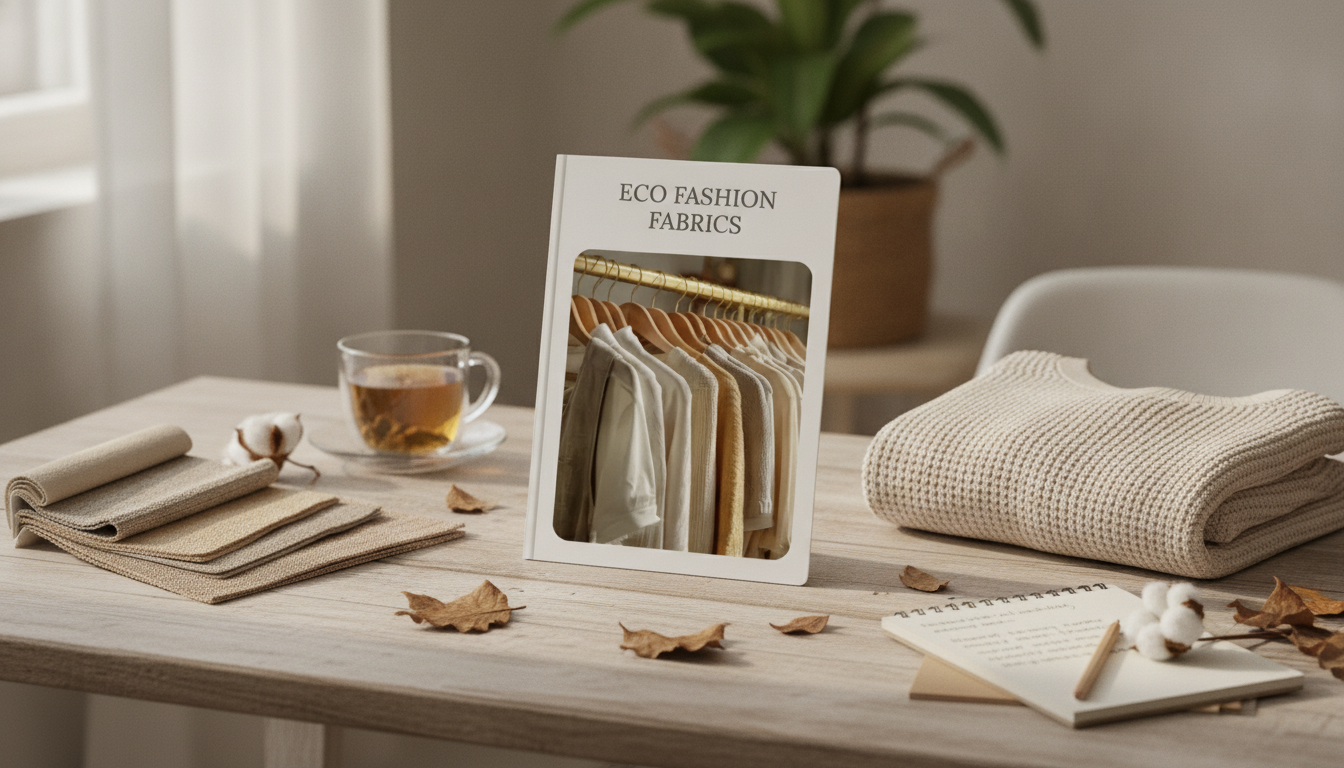
Choosing better clothing starts with reading fabric labels like a detective, not trusting a feel-good tag line. Some fibers are naturally lower-impact, others can be excellent or problematic depending on the factory process, and a few are consistently resource-intensive or pollution-heavy. Use this guide to sort out what to prioritize, what to treat cautiously, and what to check before buying—especially when shopping online or secondhand.
When a product listing throws ten “sustainable” buzzwords at you, zoom out and start with the fiber category: natural (plant/animal), regenerated cellulose (made from wood pulp), or synthetic (plastic-based). That single step helps you predict durability, care needs, and likely environmental tradeoffs.
These materials often land in the “safer bet” category because they’re typically durable, repairable, or produced with better-established standards—assuming you still check the details.
| Fabric type | Buy/Prefer | Avoid/Be cautious | What to check on the label or listing |
|---|---|---|---|
| Cotton | Organic, recycled, heavy-weight basics | Conventional ultra-light cotton that wears out fast | GOTS/OCS claims, fabric weight, tight weave/knit |
| Linen (flax) | Undyed/naturals, sturdy weaves | Heavily finished “wrinkle-free” treatments | Country of origin, certifications when available, care instructions |
| Hemp | Higher hemp content blends | Mystery blends with no percentages listed | Exact fiber percentages, softness achieved via finishing vs. fiber quality |
| Lyocell | TENCEL™ Lyocell, closed-loop claims | Generic “rayon/viscose” with no sourcing details | FSC/PEFC pulp, supplier transparency, OEKO-TEX®/ZDHC alignment |
| Wool | Recycled, responsible, long-staple knits | Cheap wool blends that pill quickly | RWS, recycled content, knit density, care needs |
| Polyester/nylon | Recycled for outerwear/activewear when needed | Virgin synthetics for disposable trends | Recycled content %, durability, microfiber shedding mitigation (wash bag/filter) |
| Bamboo (as fiber) | Only if clearly lyocell/closed-loop | “Bamboo viscose/rayon” with vague claims | Process type (lyocell vs viscose), certifications, factory standards |
Sometimes a fabric is popular because it’s cheap or convenient—not because it’s built to last or made responsibly. Treat these as “only if you truly need it” materials, and when you do buy them, prioritize durability and transparency.
For deeper material benchmarks and industry context, see resources from Textile Exchange, chemical safety standards from OEKO-TEX®, and supply chain criteria from bluesign®.
No—“bamboo” often means bamboo viscose/rayon, and the sustainability depends on the processing method (closed-loop lyocell is typically preferable), chemical management, and sourcing certifications.
It depends on the job: organic cotton tends to work well for breathable everyday basics, while recycled polyester can make sense for outerwear or activewear when it improves durability and performance. With polyester, factor in microfiber shedding and choose long-lasting construction.
GOTS (organic textiles), OEKO-TEX® (restricted substances), bluesign® (safer chemistry), RWS (responsible wool), and FSC/PEFC (forest-based inputs) are among the most useful. Treat certification as one data point alongside durability and transparency.









Leave a comment