Feeding a New Kitten: A Simple Plan for Healthy Growth and Calm Mealtimes
A kitten’s first weeks at home set the tone for digestion, growth, and behavior around food. The goal is steady weight gain, consistent stools, good hydration, and stress-free routines—without overfeeding or switching foods too fast. With a few smart defaults (a growth-formulated diet, predictable meal times, and gradual changes), most feeding worries get simpler fast.
What a growing kitten needs (and why kitten food is different)
Kittens aren’t just “small cats.” They’re building bone, muscle, and brain tissue at a rapid pace, which means their nutrition needs are more concentrated than an adult cat’s.
- Higher energy needs than adult cats: growth requires more calories per pound of body weight.
- More protein and key amino acids (especially taurine): taurine supports vision and heart health, and it’s essential for cats.
- Balanced minerals (calcium/phosphorus): critical for bones and teeth; avoid vague “all life stages” options unless the label clearly states it meets growth needs.
- DHA and essential fatty acids: can support brain and eye development, especially during early growth stages.
- “Complete and balanced” labeling matters: look for a statement indicating the food is complete and balanced for growth (kitten).
For deeper, vet-aligned nutrition guidance, reputable references include the WSAVA Global Nutrition Guidelines and the Cornell Feline Health Center.
What food to start a new kitten on
The easiest way to prevent tummy trouble is to begin with what your kitten already recognizes and tolerates.
- Start with the same food the kitten was eating before adoption whenever possible; confirm brand, formula, and whether it was wet, dry, or both.
- If the previous food is unknown, pick a reputable, complete-and-balanced kitten formula and introduce changes gradually over 7–10 days.
- Wet food supports hydration and can be easier for young kittens to eat; dry food is convenient but should be paired with excellent water access.
- Avoid cow’s milk: many kittens are lactose intolerant and may develop diarrhea.
- Match the texture to your kitten: pâté or mousse is often easier for small mouths; add warm water to soften as needed.
Starter feeding schedule by age (general guidance)
| Kitten age |
Meals per day |
Food texture |
Notes to watch |
| 6–8 weeks |
4–5 |
Mostly wet or softened |
Monitor appetite closely; small, frequent meals help prevent low energy |
| 8–12 weeks |
4 |
Wet + optional dry |
Keep changes slow; aim for consistent stool quality |
| 3–6 months |
3 |
Wet and/or dry |
Growth is rapid; weigh weekly if possible |
| 6–12 months |
2–3 |
Wet and/or dry |
Transition toward adult routine near 10–12 months if advised by a vet |
How much to feed: practical portioning without guesswork
Portioning is less about finding a “perfect number” and more about watching trends. Use the package guide as a starting point, then adjust based on results.
- Start with the label feeding guide, then fine-tune based on body condition and steady growth.
- Healthy signs: bright energy, shiny coat, steady weight gain, and formed stools.
- Concerning signs: persistent diarrhea, vomiting, bloated belly, or lethargy.
- Measure consistently: use a standard measuring cup for dry food; track can size and daily totals for wet food to avoid accidental overfeeding.
- Split the daily total into multiple meals: this can reduce gulping and support smoother digestion.
- Treats stay small: keep them under about 10% of daily calories so balanced meals remain the foundation.
If you’re unsure whether growth is on track, a prompt kitten wellness visit can help confirm a healthy rate of gain; many clinics follow life-stage guidance like the AAHA Life Stage Guidelines.
A calm first-30-days routine: timing, environment, and consistency
Routine is the fastest way to reduce mealtime stress. When your kitten can predict where and when food appears, they’re less likely to beg, guard, or gulp.
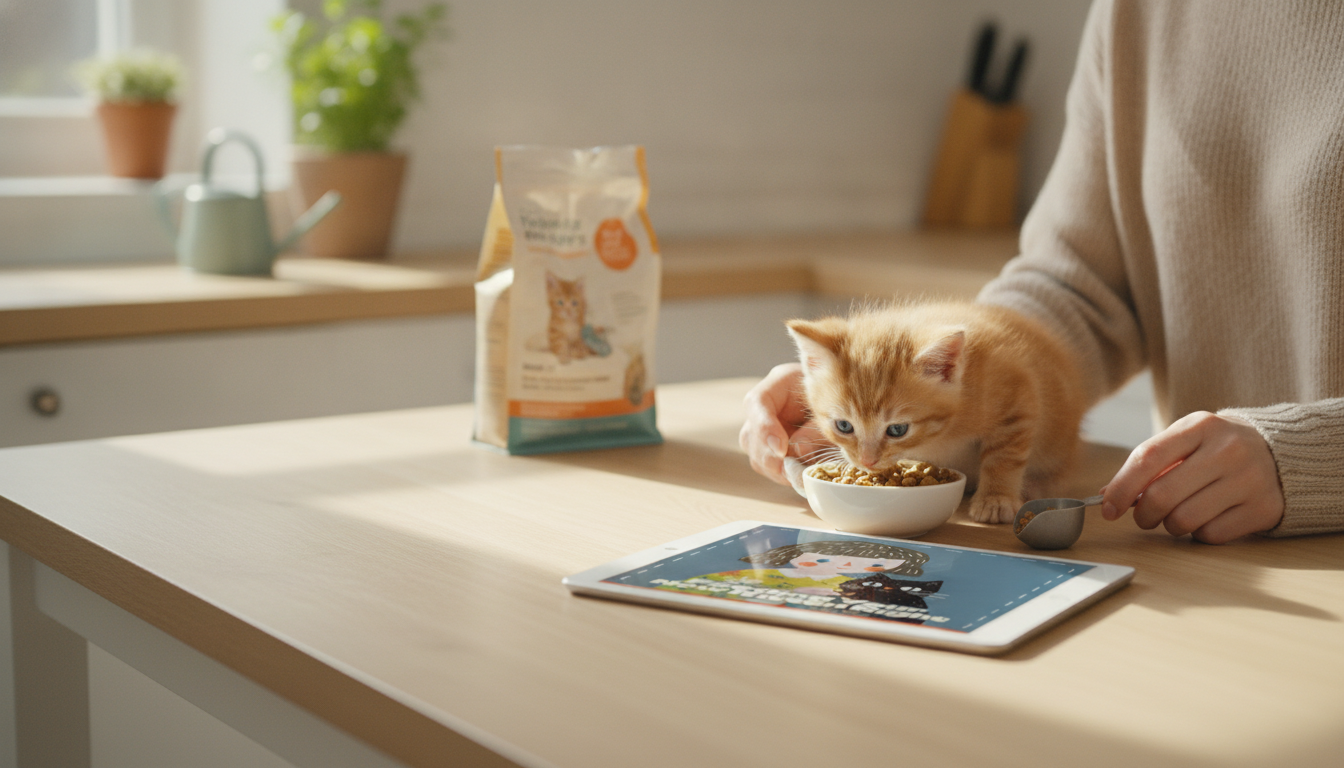
- Set consistent meal times and feed in a quiet spot away from litter boxes and heavy foot traffic.
- Use shallow, kitten-friendly dishes; wide bowls can help avoid whisker stress.
- If multiple pets live in the home, feed separately so the kitten can eat at a natural pace.
- Warm wet food slightly (not hot) to increase aroma if appetite is low during the first days of adjustment.
- Offer water in multiple locations; many kittens drink better from wide bowls or fountains.
Switching foods safely (7–10 day transition plan)
Even a high-quality food can cause digestive upset if the switch happens too quickly. A slow, structured transition is gentler on the gut.
Common feeding challenges and simple fixes
A step-by-step guide for confident feeding decisions
Recommended resources (in stock)
FAQ
Should a new kitten eat wet food, dry food, or both?
Wet food can help support hydration and is often easier for young kittens to manage, while dry food is convenient and can work well if fresh water is always available. Many kittens do best on a combination, especially if that’s what they were already eating, and any change should be made gradually.
How often should a kitten be fed each day?
Very young kittens typically do best with 4–5 small meals per day, then about 4 meals through 8–12 weeks, around 3 meals from 3–6 months, and 2–3 meals from 6–12 months. Keeping timing consistent and splitting the daily total helps digestion and reduces overeating.
What if a kitten gets diarrhea after switching foods?
Slow the transition and go back to the last ratio your kitten tolerated (for example, more of the old food) while keeping the diet simple and consistent. Watch hydration closely, and contact a veterinarian if diarrhea is watery, contains blood, comes with repeated vomiting, lethargy, or your kitten refuses food.
Recommended for you












Leave a comment